Drone Inspections vs Traditional Access Methods: Cost, Time, and Disruption
When planning an inspection, one of the biggest considerations is not just what needs to be inspected, but how it will be accessed.
Traditional inspection methods such as scaffolding, MEWPs, rope access, or confined space entry have long been the standard approach. Drone and FPV inspections offer an alternative—but they are not always a direct replacement.
This article compares drone inspections with traditional access methods, focusing on cost, time, disruption, and risk, to help determine when each approach makes the most sense.
Traditional Access Methods: An Overview
Scaffolding
Scaffolding provides stable access and allows physical inspection and testing. However, it often involves:
-
Significant setup and dismantling time
-
High labour and material costs
-
Site disruption and restricted access
-
Planning and permitting delays
Scaffolding is typically justified where extensive physical work is required, but it is rarely cost-effective for initial inspections alone.
MEWPs (Mobile Elevated Work Platforms)
MEWPs are commonly used for short-duration access tasks and façade inspections.
Limitations include:
-
Restricted reach and angles
-
Ground bearing pressure concerns
-
Requirement for exclusion zones
-
Limited suitability for complex or enclosed areas
MEWPs can be effective, but access constraints often limit what can realistically be inspected.
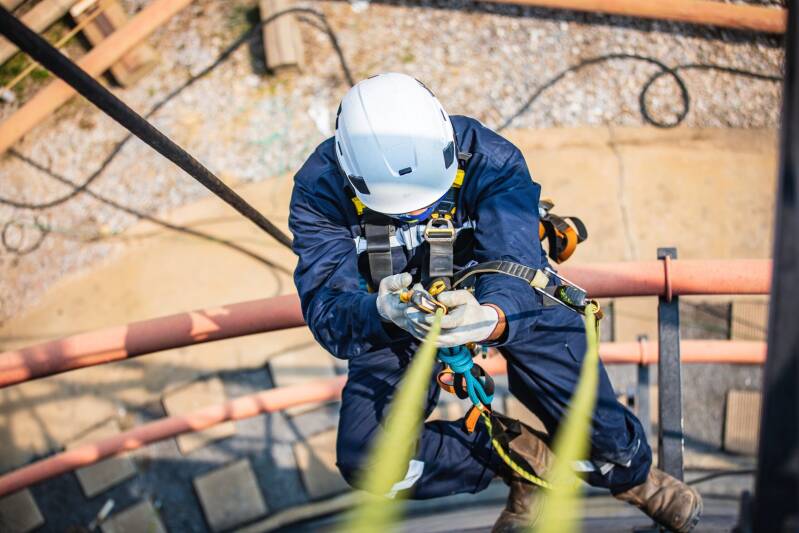
Rope Access
Rope access provides flexibility and close-up inspection capability, particularly on tall or complex structures.
However, it involves:
-
Highly skilled personnel
-
Complex planning and rescue provisions
-
Weather sensitivity
-
Ongoing exposure to working-at-height risk
It is often more efficient than scaffolding, but still carries significant safety and cost considerations.
Confined Space Entry
Confined space inspections require strict controls, including:
-
Permits and rescue planning
-
Atmospheric testing and monitoring
-
Multiple personnel on standby
-
Operational downtime
While sometimes unavoidable, confined space entry is resource-intensive and carries elevated risk.
How Drone and FPV Inspections Compare
Cost
Drone inspections typically:
-
Eliminate or reduce temporary access costs
-
Require fewer personnel on site
-
Reduce preparatory works
While drones cannot replace all physical inspections, they are often significantly more cost-effective for initial condition assessments.
Time
Traditional access methods can take days or weeks to arrange. Drone inspections often allow:
-
Rapid mobilisation
-
Same-day inspections
-
Fast access to difficult areas
This speed is particularly valuable where inspections are required urgently or to inform next steps.
Disruption
One of the most significant advantages of drone inspections is minimal disruption.
In many cases:
-
No scaffolding is erected
-
No access routes are blocked
-
No shutdowns are required
This is especially important for operational industrial and commercial sites.
Safety
Drone inspections reduce the need for:
-
Working at height
-
Confined space entry
-
Exposure to fragile structures
While drones introduce their own operational considerations, they significantly reduce direct human exposure to risk in many inspection scenarios.
Where Drone Inspections Work Best
Drone and FPV inspections are particularly effective when:
-
The objective is visual condition assessment
-
Access is hazardous or difficult
-
A rapid overview is required
-
The inspection is part of a staged approach
They are often used as a first-stage inspection, helping determine whether more invasive access is required—and where.
Where Traditional Access Is Still Required
There are situations where traditional methods remain necessary, including:
-
Physical testing and sampling
-
Certified measurements
-
Detailed remedial works
In these cases, drone inspections can still add value by reducing the extent, duration, or cost of access required.
A Combined Approach
The most effective inspection strategies often combine methods.
Using drone or FPV inspections first can:
-
Identify priority areas
-
Reduce unnecessary access
-
Improve planning for follow-on works
This approach leads to better-informed decisions, improved safety, and more efficient use of resources.
Conclusion
Drone inspections are not a replacement for all traditional access methods—but they are a powerful tool for reducing cost, time, and disruption when used appropriately.
By understanding the strengths and limitations of each approach, asset owners and engineers can select the most efficient and safest inspection strategy for each project.




Add comment
Comments